How to Rig for Barred Surfperch
Barred surfperch are one of California's most approachable surf targets. A simple rig, modest tackle, and attention to beach structure are more important than elaborate gear. The setup below is built around a High-Low Rig because it presents two baits just above the bottom and is easy to adjust as the surf changes.
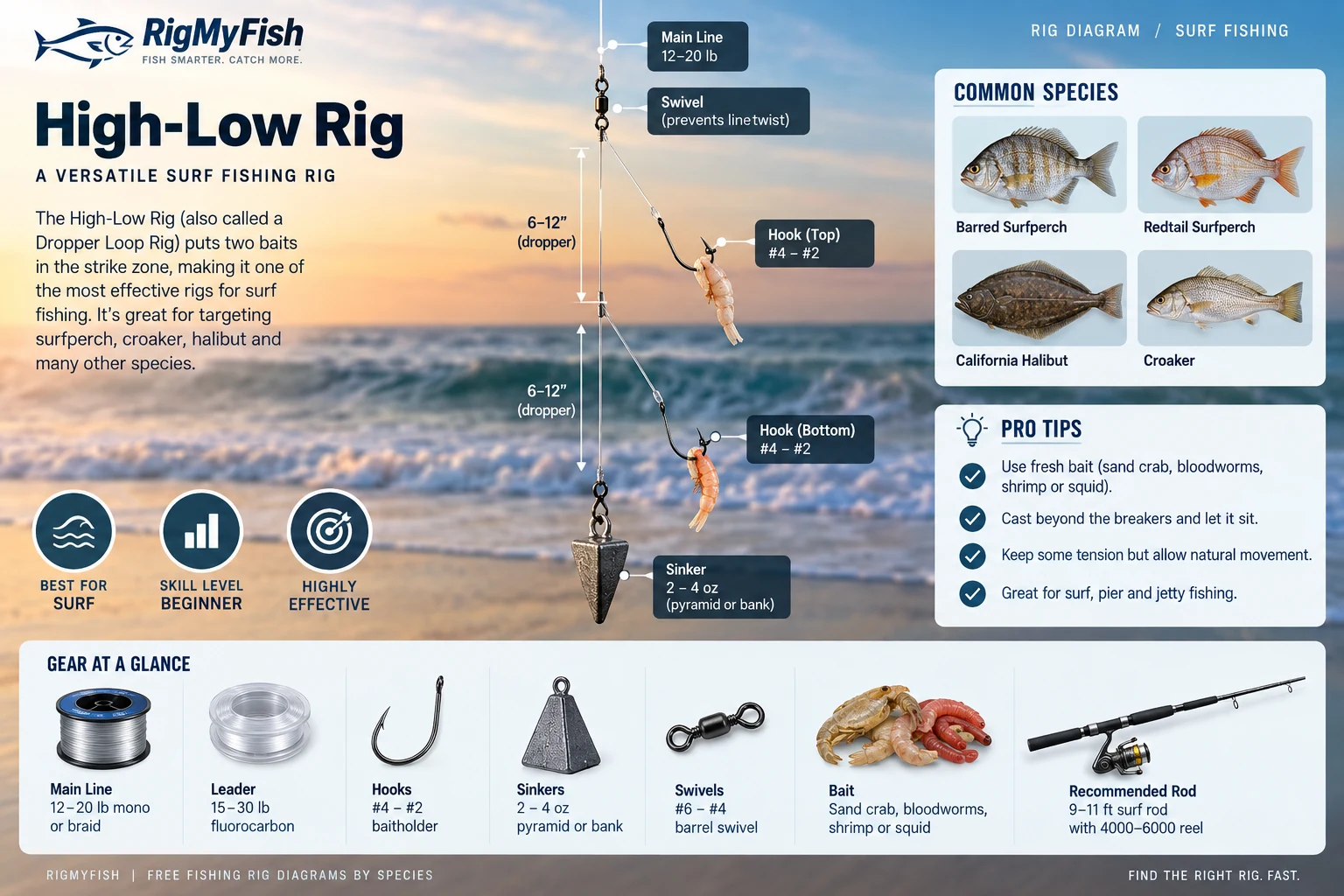
Tie a High-Low Rig with a fluorocarbon leader, two small hooks, and a pyramid sinker. Bait with sand crab or bloodworm and fish troughs, cuts, and the wash rather than automatically casting as far as possible.
Build the rig
Start with the High-Low Rig diagram and gear list. Tie the leader to the main line through the recommended swivel connection, create the dropper loops, add the hooks, and attach a pyramid or bank sinker at the bottom. Keep the droppers short enough that they do not wrap around the leader on every cast.
Choose bait that matches the beach
Sand crabs are a natural choice where they are present in the swash. Bloodworms and ghost shrimp are useful alternatives when you need scent or a bait that stays on the hook differently. Use a bait size that leaves the hook point exposed.
Fish the structure, not the horizon
Barred surfperch often work the same troughs and wash zones that carry food. Cast to a visible trough, a darker cut, the edge of a rip, or a seam between breaking and calmer water. If you do not get a bite, move a short distance and repeat instead of anchoring to one empty stretch of beach.
Related rig diagrams
Related species
Primary references
Technique guidance is educational. Seasons and regulations can change; verify current rules before fishing or keeping fish.
Common Questions
Are barred surfperch available year-round?
CDFW describes Central California surfperch fishing as year-round, with October through June listed as the peak period; Southern California guidance lists September through May as peak surfperch months.
Do I need a long cast for barred surfperch?
No. Surfperch often feed in troughs and wash close to shore, so beach structure is a better target than maximum distance.
Can I use one hook instead of two?
Yes. Two hooks are convenient for testing baits, but a single-hook bottom setup can be simpler when weeds or tangles are a problem.