Where to Cast in Lakes & Rivers
Freshwater fishing becomes easier when you stop treating a lake or river as one uniform body of water. Depth changes, shade, vegetation, current, and structure create distinct targets.
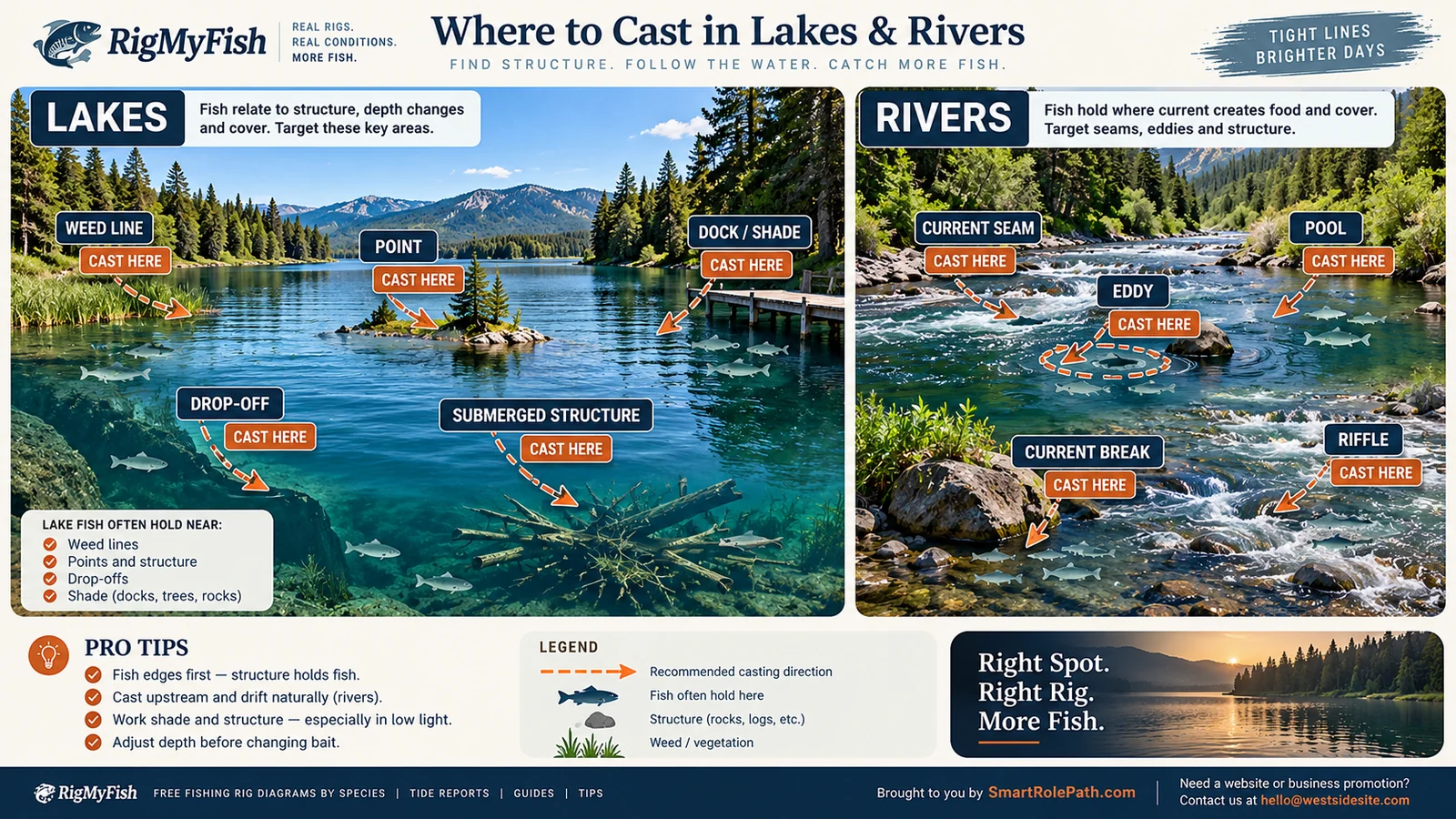
In lakes, target edges and structure such as weed lines, docks, points, drop-offs, and submerged cover. In rivers, work current seams, eddies, pools, riffles, and breaks where fast and slow water meet.
Lake targets
Work weed edges, docks, points, drop-offs, and submerged timber as separate zones. Fish often relate to an edge, depth change, shade line, or piece of cover rather than open featureless water.
River targets
Use current as your map. Seams, eddies, pools, riffles, and current breaks create different speeds and depths that change how bait and lures move.
Change depth before changing everything else
If a productive-looking area is not producing, test a different depth or angle before abandoning the structure entirely.
Related rig diagrams
Related species
Common Questions
Where should I cast first in a lake?
Start with visible edges or structure: weed lines, docks, points, drop-offs, or submerged cover. Work the edge before moving into open water.
Where do fish hold in a river?
Current seams, eddies, pools, riffles, and current breaks are useful starting points because they create changes in speed, depth, and food delivery.