Where to Cast When Surf Fishing
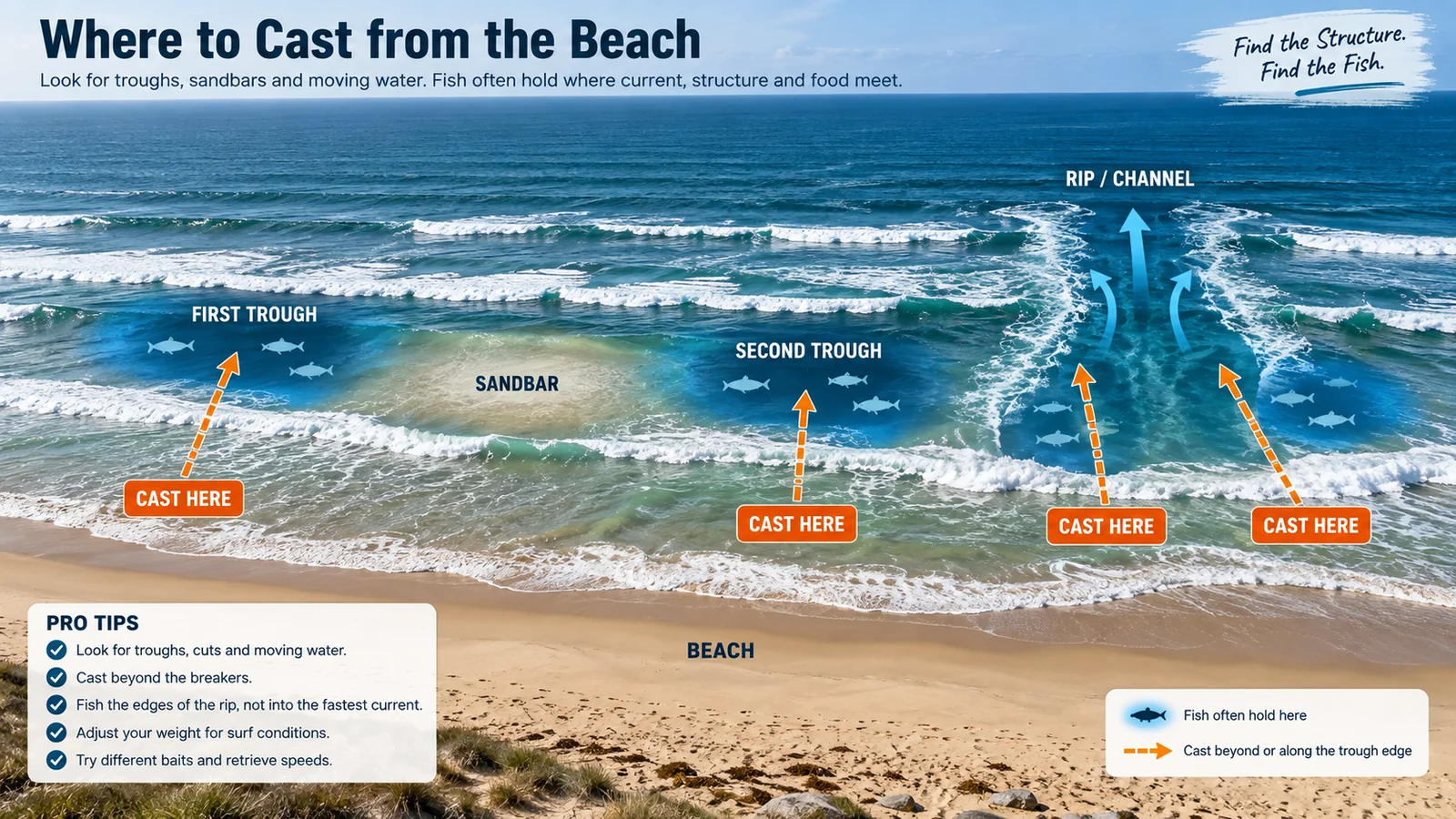
Beach water looks uniform until you learn to read it. Small changes in depth, wave shape, foam movement, and current can reveal troughs and channels where food concentrates and fish travel.
Do not assume the farthest cast is the best cast. Look for troughs, cuts, rip edges, darker channels, and places where moving water meets structure, then place the rig along those edges.
Fish the first trough before bombing a long cast
Many anglers walk straight to the water and cast as far as possible. Start by checking the nearshore trough and wash first, especially when bait or small fish are visible close to the beach.
Use the edge of moving water
A rip or channel can reveal a deeper route through a sandbar. Work the edge of that moving water rather than automatically placing bait in the fastest part of the flow.
Let the rig match the water
Use enough sinker to hold your chosen zone. If current keeps sweeping the bait away, a pyramid sinker or more stable bottom rig can help you keep the presentation where you intended.
Related rig diagrams
Related species
Primary references
Technique guidance is educational. Seasons and regulations can change; verify current rules before fishing or keeping fish.
Common Questions
Should I always cast beyond the breakers?
No. Productive water can be close to shore. Read the troughs, cuts, wash, and current first, then place the bait where structure and moving water meet.
What does a rip channel look like?
It often appears as a darker or smoother path through breaking waves, with foam or surface water moving seaward. Treat it as a visual clue, not a guarantee of fish.